01
Bring the ingredients to room temperature
Before you start, bring the eggs and butter to room temperature. This way they combine more easily and the batter is less likely to split.
Tip: The butter should be soft and workable, but not melted.
Tortine

Before you start, bring the eggs and butter to room temperature. This way they combine more easily and the batter is less likely to split.
Tip: The butter should be soft and workable, but not melted.
Put the whole piece of citron, peel included, into boiling water. Lower the heat slightly and let it simmer for 10 minutes.
Tip: This step helps soften the bitterness of the white pith.
Drain the citron and let it cool slightly. Remove any seeds, then blend it very finely together with the peel into a smooth purée.
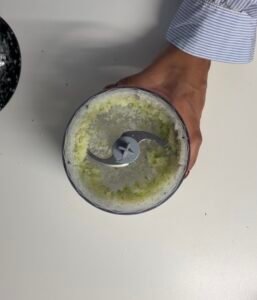
Tip: The purée should be fine, with no large pieces of peel.
Put the eggs, sugar and honey in a bowl. Whisk until the sugar has almost completely dissolved and the eggs look smooth and slightly foamy.
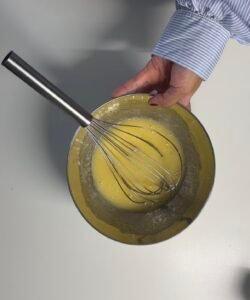
Tip: There is no need to whip the eggs as you would for a sponge cake.
Add the citron purée to the egg, sugar and honey mixture. Stir well until it is evenly distributed.
Tip: Before adding it, make sure the purée is no longer warm.
In a second bowl, beat the soft butter with an electric whisk until creamy, pale and fluffy.
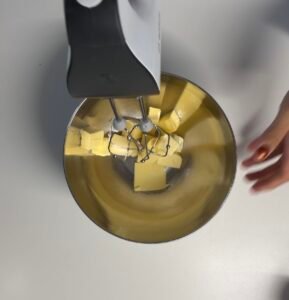
Tip: Scrape the butter from the sides of the bowl with a spatula so it is beaten evenly.
Sift the flour, baking powder and salt together. Add them to the beaten butter and fold in with a spatula until all the flour has been absorbed.
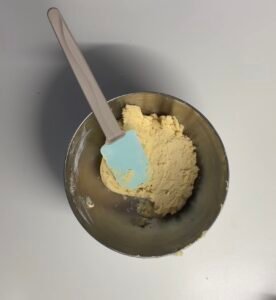
Tip: Mix only as much as needed to get an even mixture.
Add the egg and citron mixture to the butter in three additions. Mix well after each one and wait until the previous addition is fully incorporated before pouring in the next.
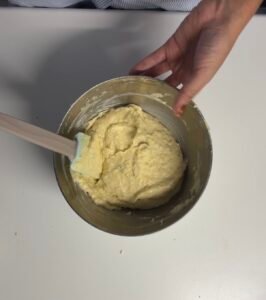
Tip: Adding it gradually is important to stop the butter from separating from the rest of the batter.
Grease a 16 × 8.5 × 5.5 cm loaf tin carefully. Pour in the batter and gently level the top.
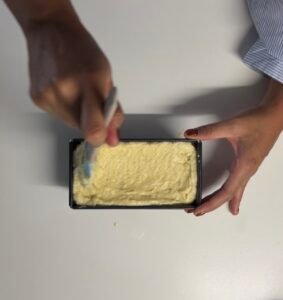
Tip: Do not tap the tin on the counter too much, or you will knock out the air you have incorporated.
Place a thin strip of soft butter down the centre of the batter, along the whole length of the loaf.
Tip: The butter strip helps the cake split neatly down the middle as it bakes.
Bake in a preheated conventional oven at 160 °C for about 50 minutes. Start checking after 45 minutes by inserting a skewer into the centre.
Tip: The skewer should come out with no raw batter; a few slightly moist crumbs are normal.
Let the loaf cake rest in the tin for a few minutes. Turn it out gently onto a wire rack and let it cool completely.
Tip: Do not glaze the cake while it is still warm, or the glaze will turn transparent and run off.
Put the icing sugar in a bowl and start by adding 18 g of citron juice. Stir and, if needed, add more juice a little at a time until you reach the consistency you want.
Tip: For a thick, opaque white glaze, stop when it falls slowly from the spoon.
Pour the citron glaze over the completely cooled loaf cake, letting it drip slightly down the sides. Wait for it to set before slicing.
Tip: Add the juice very gradually: even a few grams can make the glaze too runny.
Sofi’s tips