01
Make the dough
Put the flour, salt, sugar and water in a bowl. Mix until the flour is roughly combined and there are no dry bits left.
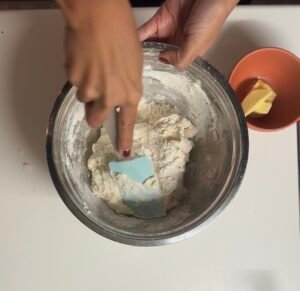
Tip: At this stage the dough doesn’t need to be perfectly smooth.
Tortine

Put the flour, salt, sugar and water in a bowl. Mix until the flour is roughly combined and there are no dry bits left.
Tip: At this stage the dough doesn’t need to be perfectly smooth.
Add the 20 g of soft butter and knead the dough by hand for about 10 minutes, until smooth and even.
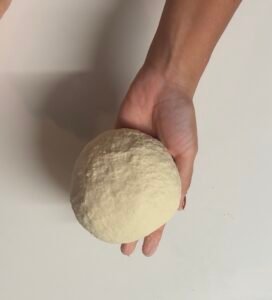
Tip: The butter should be soft but not melted.
Wrap the dough in cling film and let it rest in the fridge for 1 hour.
Tip: Lay it on a flat surface so it keeps an even shape.
Place the 120 g of butter between two sheets of baking paper or inside a plastic bag. Press and roll it out into a neat square.
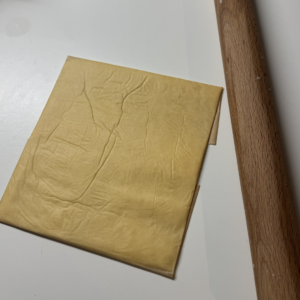
Tip: Try to spread the butter to an even thickness.
Let the butter square rest in the fridge for 30 minutes.
Tip: When you use it, it should be cold but still pliable, without cracking.
Pour the milk into a small saucepan and add the saffron together with the vanilla or lemon zest. Warm it without bringing it to the boil.
Tip: Stir well so the saffron spreads evenly through the milk.
In a bowl, mix the egg yolks with the sugar. Add the cornstarch and stir until smooth.
Tip: There’s no need to whip the yolks, just get rid of any lumps.
Pour the hot milk a little at a time over the yolk mixture, whisking as you go. Pour everything back into the saucepan and cook over medium-low heat, stirring constantly. When the cream thickens and the first bubbles appear, keep cooking for about 1 minute.
Tip: Stir right down to the bottom and into the corners of the pan so the cream doesn’t stick.
Transfer the cream to a shallow container and cover it with cling film touching the surface. Cool it quickly over an ice water bath, then move it to the fridge.
Tip: The cream must be completely cold before you add the ricotta.
Work the drained ricotta with a spatula or push it through a sieve. Whisk the cold cream to loosen it and fold in the ricotta in two or three additions.
Tip: Don’t add the ricotta to warm cream, or the filling could turn too soft.
Cover the saffron and goat ricotta cream and let it rest in the fridge for at least 1 hour.
Tip: Resting makes it firmer and easier to pipe.
Take the dough out of the fridge and roll it out on a lightly floured surface into a rectangle as wide as the butter square and twice as long. Place the butter on one half and fold the other half over it, like closing a book. Press the edges firmly with your fingers. The butter is now sealed inside the dough like a letter in an envelope.
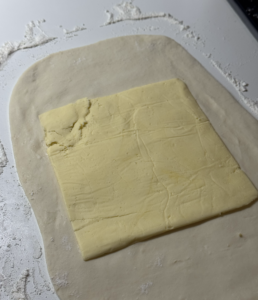
Tip: Check there are no holes or open edges, or the butter will escape when you roll.
With the rolling pin, roll the package out lengthwise only, until you have a strip about three times as long as it is wide and about 1 cm thick. Imagine dividing it into three equal parts. Fold the top third towards the centre, then cover it with the bottom third, just like folding a letter to fit it in an envelope. You now have a package with three layers stacked on top of each other.
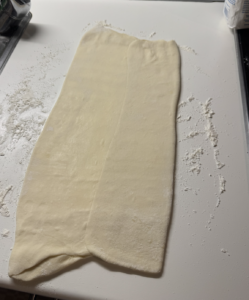
Tip: Brush off any excess flour before folding, so the layers stick together.
Give the package a quarter turn, so the open side faces you like the pages of a book. Roll it out again into a long strip and make another letter fold as before. Repeat turn, roll and fold until you have made four folds in total.
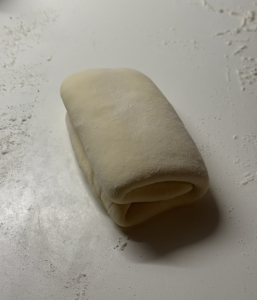
Tip: After each fold press a fingerprint into the dough, one for the first, two for the second and so on, so you never lose count. If the butter softens or seeps out, chill the dough in the fridge for 15 minutes and then carry on with the next fold.
Wrap the laminated dough in cling film and let it rest in the fridge for 30 minutes.
Tip: Resting relaxes the dough and keeps the butter layers cold.
Roll the dough out one last time into a large rectangle of even thickness. Trim all the edges with a sharp knife and cut 8–10 neat squares.
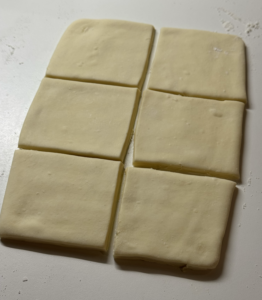
Tip: Cut with clean strokes without dragging the knife, so you don’t squash the layers.
Place the squares on a baking tray lined with baking paper, leaving space between them.
Tip: Don’t press the tops or edges of the squares before baking.
Bake in a preheated fan oven at 170 °C for about 40 minutes, until the cubes are well risen, golden and dry.
Tip: The puff pastry must be fully baked in the centre too, otherwise the layers will stay damp.
Move the puff pastry cubes to a wire rack and let them cool completely before filling.
Tip: Only add the cream once the pastry is completely cold.
Cut the peaches into wedges. Melt the butter in a hot pan and cook the slices for a few minutes, until lightly golden and caramelised on both sides.
Tip: Use ripe but still firm peaches so they hold their shape while cooking.
Make an opening in the side of each cube or score it gently. Spoon the saffron and goat ricotta cream into a piping bag and fill each piece generously.
Tip: Fill the pastry shortly before serving so it stays crisper.
Place a slice of grilled peach on top of each filled cube and serve.
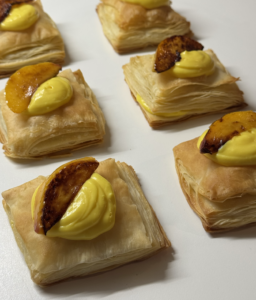
Tip: Let the peaches cool slightly before placing them on the cold cream.
Sofi’s tips