On your phone, choose “Save as PDF” or “Save to Files” in the print options.
SOFIDRINKINI

Tortine

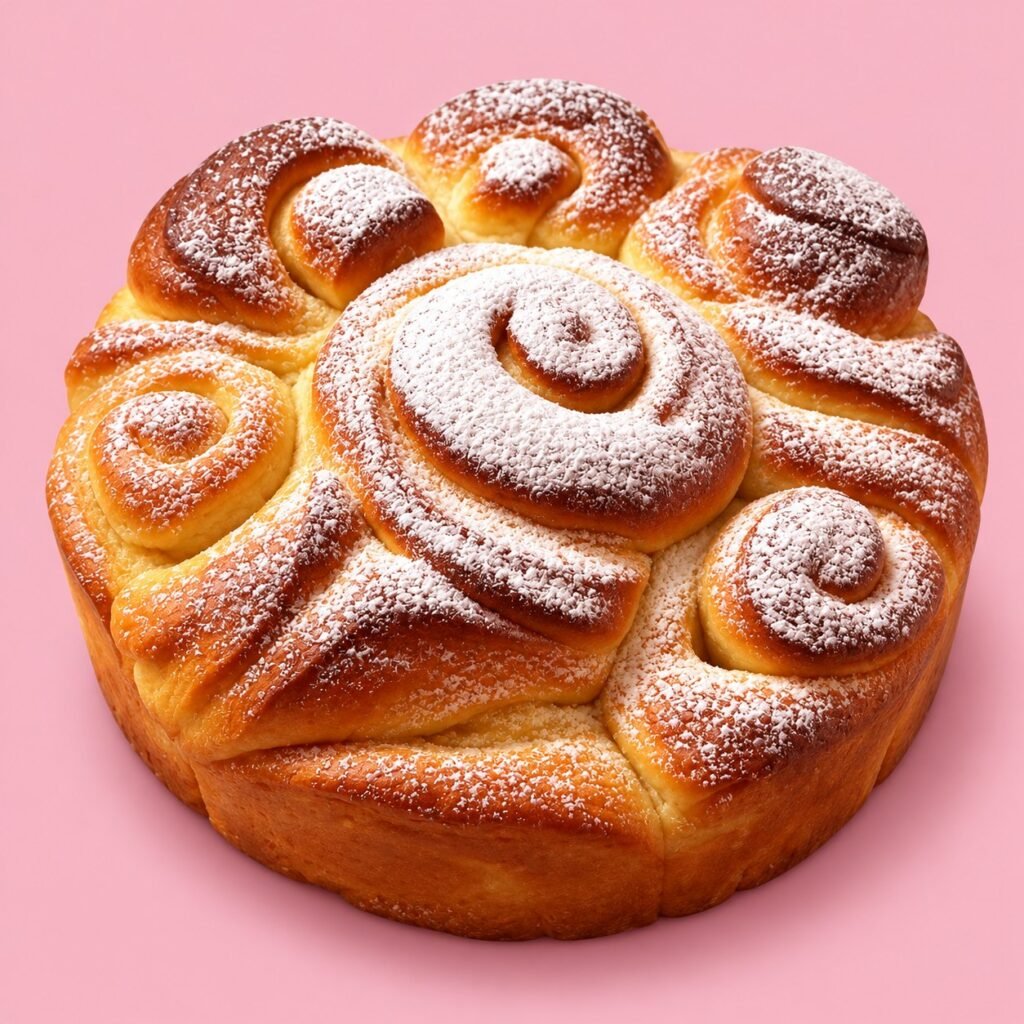
Soft rose cake

PrepAbout 45 min
First rise1 h 30 – 2 h 30
Second rise1 h 15 – 2 h 15
Baking35–45 min
Soft rose cake

Method

01

Get the ingredients ready

Bring the egg, yolk and butter to room temperature. The butter should be soft but not melted. Bring the milk to about 20–24 °C, weigh out 235 g and set the remaining 15 g aside. Fit the dough hook on the stand mixer.

Tip: The 15 g of milk set aside only go in if the dough turns out too stiff.

02

Make the first dough

Put the Manitoba flour, 00 flour and Caputo dry yeast in the mixer bowl. Add 235 g of milk, the whole egg and the yolk. Knead on low speed, roughly 1–2 out of 10, until you have a rough but even mass.

Tip: If the dough looks very stiff, gradually work in the 15 g of milk you set aside.

03

Work in the sugar

Raise the mixer to speed 2–3 out of 10. Add the sugar in three additions, waiting until each is absorbed before adding the next. Then add the salt, orange zest and vanilla seeds.

Tip: Keep kneading until the dough starts to turn elastic and gather around the hook.

04

Add the butter

Add the 70 g of soft butter in 4–5 small pieces, keeping the mixer on speed 3–4 out of 10. Wait until each piece is fully worked in before adding the next.

Tip: The butter should be soft and pliable, but not melted.

05

Finish developing the dough

Keep kneading until the dough is smooth, glossy and elastic and mostly comes away from the sides of the bowl. Pull off a small piece and gently stretch it with your fingers. It should form a thin, almost see-through film before it tears.

Tip: The dough should stay soft and slightly sticky. Don’t add flour. Try to keep it at 24–26 °C, and if it goes above 27–28 °C stop the mixer for 5–10 minutes.

06

First rise

With lightly buttered hands, shape a ball and put it in a lightly greased container. Cover and let it rise at 24–26 °C until it has grown by about 80–100%.

Tip: It can take anywhere from 1 hour 30 minutes to 2 hours 30 minutes. Watch the volume of the dough, not just the clock.

07

Make the butter cream

While the dough rises, work the 110 g of soft butter with the 100 g of sugar and a little vanilla if you like, using a spatula. You want a smooth, easy-to-spread cream.

Tip: Don’t melt the butter, as the cream has to stay firm while you shape the roses.

08

Roll out the dough

Gently turn the dough out onto the work surface and knock it back only as much as needed. Roll it into a rectangle of about 40 × 50 cm, 5–6 mm thick.

Tip: After the first rise, don’t overwork the dough or press it more than necessary.

09

Spread the filling

Spread the butter and sugar cream over the whole surface in a thin, even layer. Leave a 1–2 cm border clear along one of the long sides.

Tip: An even layer of filling gives you a neat swirl in every rose.

10

Shape the roses

Roll up the dough starting from the long side opposite the clear border, until you have a log about 50 cm long. Gently seal the edge and cut the log into 12 roses about 4 cm tall.

Tip: Use a very sharp knife or food-safe thread so you don’t squash the swirls while cutting.

11

Arrange the roses in the pan

Line a 26 cm round pan with baking paper. Arrange the 12 roses swirl side up, leaving a little space between them.

Tip: The gaps let the roses grow during the second rise.

12

Second rise

Cover the pan without pressing on the dough and let it rise at 24–26 °C until the roses are well puffed and almost touching.

Tip: Don’t speed up the rise with high temperatures, or the butter cream could melt and leak out. It can take from 1 hour 15 minutes to 2 hours 15 minutes.

13

Bake the cake

Bake on the lower-middle rack of a preheated conventional oven (no fan) at 170 °C for about 35–45 minutes. After 25–30 minutes check the colour, and if the top is getting too dark, gently cover it with foil.

Tip: If you use a probe thermometer, the centre of the cake should reach about 93–95 °C.

14

Let it cool

Let the cake settle in the pan for 10–15 minutes. Gently lift it out and move it to a wire rack. You can serve it still warm, when the centre is soft and the roses pull apart easily.

Tip: Don’t bake it longer than needed, or the crumb will lose its softness.

Sofi’s tips

Small details, great result.

01 The dough is ready when it passes the windowpane test and stretches into a thin, almost see-through film.
02 Don’t add flour just because the dough sticks a little to your hands.
03 Keep the dough at about 24–26 °C while kneading.
04 Don’t speed up the second rise with high temperatures, or the butter cream could melt.
05 After the first rise, roll the dough out gently without overworking or deflating it.
06 Check the cake after 25–30 minutes and cover the top with foil if it browns too much.
07 Don’t bake longer than needed, the centre must be cooked but the crumb should stay soft.